Physical Address
304 North Cardinal St.
Dorchester Center, MA 02124
Physical Address
304 North Cardinal St.
Dorchester Center, MA 02124
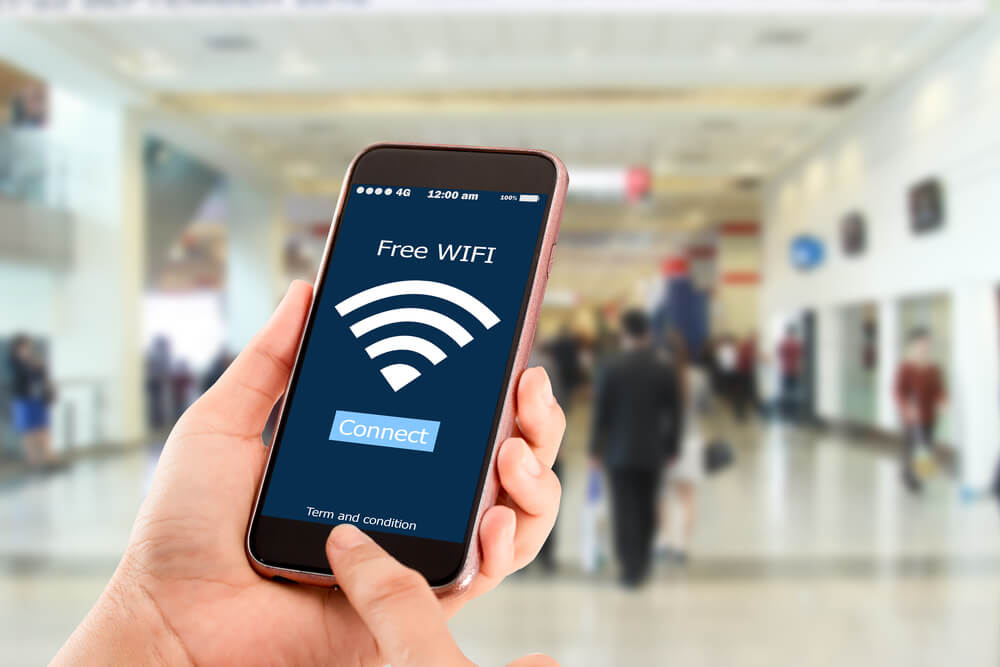
You’re sitting in a coffee shop, laptop open, connected to the free Wi-Fi. Maybe you check your email. Maybe you log into your bank to transfer some money. Maybe you do a bit of online shopping, entering your card details to grab something on sale.
Completely normal. Millions of people do exactly this every single day.
And somewhere in that same coffee shop — or parked outside in a car, or sitting in the airport lounge three gates down — someone might be watching every bit of that activity. Not with binoculars. With a laptop and freely available software that costs nothing and requires surprisingly little technical knowledge to operate.
Public Wi-Fi is genuinely one of the most exploited attack surfaces in everyday life. Not because the technology is inherently broken — it’s gotten meaningfully better over the years — but because the combination of how people actually use it, how much sensitive activity happens over it, and how easy certain attacks remain makes it a reliable hunting ground for anyone willing to spend an afternoon learning the basics.
But here’s where most public Wi-Fi security articles go wrong: they either catastrophize everything into “never connect to public Wi-Fi ever” — which isn’t realistic advice — or they downplay real risks because HTTPS has made things safer. Neither extreme gives you what you actually need.
This guide gives you the honest, calibrated picture. What attacks are genuinely common and dangerous. What the HTTPS revolution has actually fixed. What it hasn’t. And exactly what you need to do to use public Wi-Fi safely — without becoming a hermit who only connects to their home network.
Before getting into specific attacks, it helps to understand why public Wi-Fi creates a fundamentally different security environment than your home network.
Your home Wi-Fi network has a few characteristics that make it relatively safe. You know who set it up. You know what devices are connected to it. You control the router. You chose the password. The network is relatively small — a handful of devices belonging to people you trust.
Public Wi-Fi has none of these properties.
When you connect to the Wi-Fi at a coffee shop, airport, hotel, or library, you’re joining a network with potentially dozens or hundreds of other connected devices — all strangers. You don’t know who configured the router, whether it’s been updated recently, what security settings are enabled, or whether any of the other connected devices are running tools designed to attack other users on the same network.
The shared nature of public Wi-Fi is the core problem. On your home network, traffic between your device and your router travels over a relatively private channel. On a public network, traffic is broadcast in a space shared with everyone else connected — and the technical barriers to intercepting that traffic are lower than most people realize.
There’s also the authentication problem. When you connect to “Coffee House Free WiFi,” how do you actually know that network was set up by the coffee shop? Spoiler: you don’t. Not without additional verification that most people never perform.
This is the foundational public Wi-Fi attack, and understanding it clearly explains why so much else in this article matters.
A man-in-the-middle (MITM) attack works exactly as the name suggests. Rather than a direct connection between your device and the website or service you’re accessing, an attacker inserts themselves between the two — intercepting the traffic flowing in both directions.
From your perspective, everything looks normal. Pages load. Logins work. Transactions complete. You have no indication anything is wrong. Meanwhile, the attacker has a copy of everything passing through that connection — potentially including credentials, session tokens, personal information, and anything else you transmitted.
The practical difficulty of executing MITM attacks depends heavily on encryption — specifically, whether the connection is protected by HTTPS. We’ll cover this in detail shortly, because the picture has changed significantly in the past decade and the nuance matters.
This is one of the most effective and underappreciated public Wi-Fi attacks, and it requires no ability to crack any encryption.
An attacker sets up a Wi-Fi hotspot with a name designed to look legitimate — “Airport_Free_WiFi,” “Starbucks_WiFi,” “Hotel_Guest_Network.” Sometimes the name is identical to the actual legitimate network in the venue. The attacker’s hotspot broadcasts at a stronger signal than the real one, causing devices to automatically connect to it instead.
Your device connects. You’re browsing the internet normally — the attacker’s hotspot routes your traffic to the real internet. But everything passing through that connection is routed through the attacker’s device first.
This attack requires no hacking in the traditional sense. The attacker isn’t cracking passwords or exploiting vulnerabilities. They’re simply operating a Wi-Fi access point and letting your device connect to it voluntarily. Hardware capable of doing this costs under fifty dollars. Software for doing it is freely available.
The critical insight: you have no reliable way to distinguish a legitimate public Wi-Fi network from a convincing evil twin without additional tools. The network name, signal strength, and internet connectivity all look identical.
Network traffic travels as packets of data. On a Wi-Fi network, these packets are broadcast through the air — and on unencrypted networks, they can be captured and read by anyone within range using packet capture software.
Packet sniffing software is freely available, widely used by legitimate network administrators for diagnostics, and trivially usable for malicious purposes on public networks. Tools like Wireshark — designed for legitimate network analysis — can capture and display everything transmitted over an unencrypted network connection.
The good news: most traffic on the modern internet is encrypted via HTTPS, which means packet-sniffed traffic is encrypted and unreadable even if captured. The less good news: not all traffic is encrypted, and even encrypted traffic leaks metadata — what sites you’re visiting, when, how long — that has meaningful privacy implications.
When you log into a website, the server issues a session token — essentially a temporary credential that proves you already authenticated. Your browser stores this token and presents it automatically on subsequent requests so you don’t have to log in with every page load.
Session hijacking involves stealing that token. If an attacker captures your session token over a public network — and on HTTP connections, this is relatively straightforward — they can use it to impersonate your authenticated session on the targeted website. From the website’s perspective, the token is valid. It doesn’t know someone else is using it.
This attack was significantly more dangerous before widespread HTTPS adoption. On encrypted HTTPS connections, session tokens travel encrypted and are much harder to intercept. But it remains relevant for any service still using HTTP, and in certain scenarios involving SSL stripping attacks.
HTTPS protects your traffic. But what if you could force a connection to downgrade from HTTPS to HTTP?
SSL stripping is a technique where an attacker intercepts the initial connection request — before the HTTPS handshake completes — and forces the browser to communicate in unencrypted HTTP instead. The attacker then maintains an HTTPS connection to the target website themselves, translating between the two. Your browser shows you content from the website, but your connection to the attacker is unencrypted.
Modern browsers have added protections against SSL stripping — HTTPS Strict Transport Security (HSTS) preloading prevents browsers from ever connecting to known sites over HTTP, and most major websites are on this list. But less prominent websites remain vulnerable, and attacks against users who manually navigate to HTTP URLs rather than HTTPS remain viable.
Every time you type a web address, your device asks a DNS server to translate that human-readable name into an IP address — the actual location of the server. On public Wi-Fi, your device often uses the DNS server provided by the network’s router.
A malicious network — including an evil twin — can run a DNS server that returns incorrect results, redirecting your browser to a fake version of a legitimate website. You type your bank’s URL correctly. DNS returns the IP address of the attacker’s fake banking page. Your browser navigates there, showing a convincing replica of your bank’s login page. You enter your credentials.
This attack is particularly insidious because the URL in your browser can still appear to show your bank’s address during the brief window between your request and the redirect.
On a local network, devices communicate using ARP (Address Resolution Protocol) to identify which physical device corresponds to which IP address. ARP is built without authentication — any device can broadcast ARP messages claiming to be any IP address on the network.
ARP spoofing involves an attacker broadcasting false ARP messages — claiming their device’s MAC address corresponds to the router’s IP address. Other devices on the network update their ARP tables accordingly and start sending traffic destined for the router to the attacker instead.
This effectively becomes a man-in-the-middle position for all traffic from victim devices, without requiring any crack of the Wi-Fi password or any connection to the legitimate network infrastructure.
The internet has undergone a fundamental shift in the past decade. Driven by Google’s decision to rank HTTPS sites higher in search results, browser warnings for HTTP sites, and widespread free certificate issuance through services like Let’s Encrypt, the majority of web traffic now travels over encrypted HTTPS connections.
This is genuinely significant for public Wi-Fi security. Here’s what it fixed:
Content interception is dramatically harder. An attacker who captures your HTTPS traffic sees encrypted ciphertext — not your passwords, form submissions, or page content. The data in transit is protected against casual eavesdropping.
Session hijacking is significantly more difficult. Session tokens transmitted over HTTPS are encrypted, making them much harder to capture in a usable form.
Basic man-in-the-middle attacks against HTTPS traffic are substantially mitigated. Certificate validation means your browser verifies it’s talking to the genuine server, not an impostor with a fake certificate. Presenting a fraudulent certificate for a legitimate site triggers browser warnings.
Here’s what HTTPS didn’t fix:
Metadata is still exposed. Even over HTTPS, your DNS queries — the requests that translate domain names to IP addresses — travel unencrypted by default. An observer on the network can see exactly which websites you’re visiting, even if they can’t see what you’re doing there. Your ISP, the network operator, and anyone monitoring the network traffic can build a detailed picture of your browsing from DNS queries alone.
Evil twin attacks are unaffected. If you connect to an attacker’s rogue hotspot, all your traffic — including HTTPS traffic — routes through their device. They can see the metadata, potentially downgrade connections where possible, and perform other attacks that don’t require decrypting your traffic.
HTTP sites still exist. Not every website has implemented HTTPS. Connections to HTTP websites remain fully vulnerable to interception and content modification.
HTTPS protects the channel, not the endpoint. If you visit a legitimate HTTPS phishing page — a convincing fake login page that actually has a valid SSL certificate — your connection to that fake page is encrypted. HTTPS doesn’t tell you the site is trustworthy, only that your connection to it is encrypted.
Certificate warnings can be dismissed. Some attacks generate certificate errors that security-conscious users would recognize. Less experienced users routinely click through certificate warnings without understanding their implications.
The HTTPS revolution made public Wi-Fi meaningfully safer than it was in 2015. It didn’t make it safe.
Here’s the calibrated, honest answer that most security articles avoid because it requires nuance.
The risk is real, not hypothetical. The attacks described above are not theoretical exercises. Security researchers regularly demonstrate them at conferences like DEF CON and Black Hat. Law enforcement has prosecuted people who carried them out in coffee shops and airports. The tools are freely available and not technically demanding.
The risk is higher than most people assume. Most people, when they think about public Wi-Fi risk, imagine a sophisticated hacker doing something technically extraordinary. The reality is that many attacks require only moderate technical skill, free software, and the willingness to sit somewhere with Wi-Fi for a few hours.
The risk is lower than catastrophists suggest. The combination of widespread HTTPS adoption, browser security improvements, and modern encryption means that the average person browsing news sites, using social media over HTTPS, and not entering sensitive credentials on public Wi-Fi is at substantially lower risk than they would have been ten years ago.
The risk is highest for specific activities. Online banking. Entering credit card numbers. Accessing work systems with sensitive data. Logging into email. Using apps that don’t enforce HTTPS. These activities on public Wi-Fi represent meaningfully elevated risk compared to reading the news.
The risk varies by location. The free Wi-Fi at a major international airport — with high-value targets, sophisticated potential attackers, and low accountability — presents different risk than the password-protected Wi-Fi at a small-town library.
The risk is almost completely addressed by a VPN. This is the key practical takeaway. A reputable VPN encrypts all your device’s traffic before it leaves your device, addressing every network-level attack described above — evil twin, packet sniffing, ARP spoofing, DNS hijacking. With a VPN active on a public network, your risk profile drops dramatically.
One of the most common misconceptions about public Wi-Fi safety is that password protection means security. It doesn’t — at least not in the way most people think.
A Wi-Fi password on a public network — the password posted on the coffee shop chalkboard or printed on your hotel key card — protects the network from unauthorized connections. It does not prevent other authorized users on the same network from attacking each other.
Everyone in the coffee shop who knows the Wi-Fi password is on the same network. An attacker who has the password — which is posted publicly — has full network access and can execute ARP spoofing, rogue DHCP attacks, and other local network attacks against every other connected device.
More fundamentally, the evil twin problem makes the password question partly irrelevant. An attacker setting up a rogue hotspot with the same name as the legitimate network — and providing the same password, which they got from the same chalkboard — creates an identical-appearing network that routes your traffic through their device.
The password protects against strangers connecting to the legitimate network. It doesn’t address the scenario where the “network” you connected to isn’t the legitimate one.
Airports and transit hubs. High-value targets, international travelers, people doing work on laptops, extended waiting times that lead to more active device use. Evil twin attacks at major airports have been documented repeatedly. The FBI has specifically warned about airport Wi-Fi risks.
Hotels. Business travelers doing sensitive work. Hotel Wi-Fi networks are often poorly secured and managed by third parties. Several documented attacks on hotels have involved compromised Wi-Fi infrastructure — not just rogue hotspots but the legitimate hotel network being used to deliver malware to guests.
Coffee shops and coworking spaces. The classic scenario. Open for hours, laptop users doing real work, passwords available to anyone who orders a drink. High risk if you’re doing sensitive work.
Events and conferences. Large gatherings of professionals, often doing work on laptops, in a dense Wi-Fi environment with many competing networks. DEF CON — the world’s largest hacker conference — has a tradition of publicizing the risky behavior observed on its own network specifically to demonstrate real-world public Wi-Fi attacks.
Free public hotspots with no password. Municipal Wi-Fi, mall Wi-Fi, transit Wi-Fi with no password requirement. Without even the minimal barrier of a password, anyone can connect, and the pool of potential attackers is wider.
This is the non-negotiable foundation of public Wi-Fi safety. A reputable VPN encrypts all traffic leaving your device, routing it through an encrypted tunnel to a VPN server before it reaches the open internet. An attacker on the same network sees only encrypted data headed to a VPN server — not your actual traffic.
This addresses evil twin attacks, packet sniffing, ARP spoofing, DNS hijacking, and most other network-level attacks in a single measure.
The key word is reputable. Free VPNs frequently have troubling business models — several have been documented selling user traffic data, which makes them worse than no VPN. Some free VPNs have been found to contain malware. A VPN from a reputable security vendor or a dedicated privacy-focused provider with an audited no-logs policy provides genuine protection.
Our VPN reviews cover which services have been independently audited, what their data policies actually say, and which provide real protection versus marketing theater. If you use public Wi-Fi regularly, a paid VPN subscription is one of the highest-value security purchases available to you.
Enable your VPN before connecting to any public network — not after. The window between connecting and enabling the VPN is a brief exposure.
Before connecting to a public network, confirm its actual name with a staff member. Don’t rely solely on the list of available networks on your device — an evil twin will appear in that list alongside or instead of the legitimate network. Ask “what is the exact Wi-Fi network name?” and compare it to what appears on your device.
This doesn’t guarantee safety against a perfectly mirrored evil twin, but it eliminates the most casual attacks that rely on slightly different network names going unnoticed.
Ensure every website you visit on public Wi-Fi uses HTTPS — look for the padlock icon in your browser’s address bar. Modern browsers now warn about HTTP sites, but actively checking before entering any information adds a layer of personal verification.
For your most sensitive activity — banking, email, anything requiring login — verify the padlock is present and the URL is exactly correct before entering any credentials.
Avoid logging into any website that shows security certificate warnings on public Wi-Fi. On your home network, certificate warnings are annoying and usually benign. On public Wi-Fi, they may indicate an active attack.
Your device’s automatic Wi-Fi connection feature — designed for convenience — is a security liability on public networks. When enabled, your device continuously broadcasts the names of Wi-Fi networks you’ve connected to previously, looking for them to appear. This broadcast is visible to anyone running network monitoring tools, and evil twin attacks specifically exploit automatic connection behavior.
On iPhone: Settings → Wi-Fi → toggle off “Auto-Join” for specific networks, or Settings → Wi-Fi → Ask to Join Networks.
On Android: Settings → Connections → Wi-Fi → Wi-Fi preferences → disable auto-connect options.
On Windows: when connecting to a public network, uncheck “Connect automatically.”
Also clear your list of saved public Wi-Fi networks periodically. A long list of saved public networks means your device is broadcasting a long list of network names constantly.
Features designed for convenient sharing on trusted networks become attack surfaces on public ones.
On Windows: Control Panel → Network and Sharing Center → Change advanced sharing settings → set sharing options to off for public networks. Windows should prompt you to classify new networks as Public or Private — always choose Public for Wi-Fi outside your home.
On Mac: System Settings → General → AirDrop & Handoff — set AirDrop to “No One” when on public networks.
On iPhone: Control Center → AirDrop → Receiving Off when you don’t need it.
Even with a VPN, developing the habit of reserving your most sensitive activities for trusted networks adds a meaningful layer of protection.
Banking transactions, large purchases, work systems with sensitive data — these activities are better suited to your home network or mobile data connection. If you must do them on public Wi-Fi, ensure your VPN is active and verify the network is legitimate.
Mobile data — your phone’s 4G or 5G cellular connection — bypasses public Wi-Fi entirely and is generally safer than public Wi-Fi for sensitive activity. If you need to do something sensitive and you’re uncertain about the Wi-Fi, using your phone as a personal hotspot is a meaningful upgrade in security.
As we’ve emphasized throughout this series — in our articles on ransomware, malware symptoms, iPhone security, and Android security — keeping your operating system and apps updated closes known vulnerabilities that attackers exploit. This applies on public Wi-Fi, where attackers may specifically target known vulnerabilities in devices they can see on the network.
Enable automatic updates and install them promptly when they’re available.
If your credentials are captured on public Wi-Fi — through an attack that bypasses HTTPS protections, through a phishing page you visited, or through session hijacking — two-factor authentication prevents an attacker from using those credentials alone to access your account.
2FA means a stolen password is insufficient without also having your physical device. As we covered in our password guide, enabling 2FA on email, banking, and social media accounts is one of the most impactful security measures available regardless of the threat vector.
If you’re on public Wi-Fi and you notice your connection dropping and reconnecting repeatedly, websites presenting unexpected certificate warnings, your browser being redirected unexpectedly, or login pages looking slightly different than usual — disconnect immediately. These are potential indicators of an active attack.
Trust your instincts. If something feels off about the network or what you’re seeing in your browser, the cost of disconnecting and using mobile data instead is low. The cost of ignoring warning signs can be high.
Your smartphone’s cellular data connection — 4G LTE or 5G — provides a fundamentally different security profile than public Wi-Fi.
Cellular connections use strong encryption at the network level, are maintained between your device and your carrier’s infrastructure (not shared with nearby strangers), and are not subject to the local network attacks that make public Wi-Fi risky. Evil twin attacks don’t work against cellular connections. ARP spoofing doesn’t apply. DNS hijacking through a rogue hotspot isn’t possible.
This doesn’t mean cellular is perfectly secure — sophisticated cellular network attacks exist, and cell-site simulators (“stingrays”) used by law enforcement can intercept cellular traffic. But for everyday practical purposes, mobile data is substantially more secure than public Wi-Fi for sensitive activities.
When to switch from public Wi-Fi to mobile data:
Using your phone as a personal hotspot — tethering your laptop to your cellular connection — provides the same security benefit. Your laptop’s traffic travels over your cellular connection rather than the public Wi-Fi, bypassing all the local network risks entirely.
The data usage implications are real — heavy browsing over cellular adds up — but for short periods of sensitive activity, it’s a practical and effective solution.
If you use public Wi-Fi for work — accessing employer systems, company email, client data, work applications — the stakes extend beyond your personal information.
Many organizations have explicit policies about public Wi-Fi use, often requiring VPN connection before accessing any company systems. If your employer provides a corporate VPN, use it — every time, on every public network. This isn’t bureaucratic formality; it’s meaningful protection for both you and your employer.
The professional and legal implications of a data breach involving client or employer data can be severe. Some industries — healthcare, finance, legal — have specific regulatory requirements around data protection that extend to how employees handle data on personal devices on public networks.
If you work remotely and regularly use coffee shops, coworking spaces, or other public environments for work, invest in a quality VPN subscription and treat it as a professional tool, not an optional extra. The cost is trivial compared to the potential consequences of a breach.
Public Wi-Fi is genuinely risky — not in a way that should make you paranoid, but in a way that warrants consistent, specific protective measures.
The attacks are real. The tools are accessible. The targets are often high-value. And the false confidence many people carry onto public networks — built on a vague sense that someone would have to be very sophisticated to attack them — is misplaced.
But the protection is also real, accessible, and not complicated. A reputable VPN, consistent HTTPS verification, disabled automatic connection, and the habit of switching to mobile data for sensitive activity addresses the vast majority of practical risk.
You don’t have to avoid public Wi-Fi. You just have to use it with the same awareness you’d apply to any other environment where strangers can observe your activity. Connect intentionally, protect your traffic, and reserve your most sensitive activities for trusted networks.
The people who get hurt on public Wi-Fi are overwhelmingly the people who assumed nothing could go wrong. Now you know what can go wrong — and exactly what to do about it.
Is public Wi-Fi safe to use for online banking? Banking on public Wi-Fi carries meaningful risk even with HTTPS protection — evil twin attacks, DNS hijacking, and session-related vulnerabilities can compromise banking sessions in ways that HTTPS alone doesn’t fully prevent. The safest approach is to use mobile data or a personal hotspot for banking transactions. If you must use public Wi-Fi for banking, ensure a reputable VPN is active before connecting, verify you’re on the legitimate network, and confirm HTTPS and correct URL before entering any credentials.
Can someone steal your passwords on public Wi-Fi? Yes, through several mechanisms. On unencrypted HTTP connections, passwords can be captured directly through packet sniffing. On HTTPS connections, SSL stripping attacks can potentially downgrade the connection. Credential phishing through DNS hijacking can redirect you to fake login pages. Evil twin attacks can route all your traffic through an attacker’s device. A VPN and consistent attention to HTTPS verification significantly reduces these risks.
Does a VPN really protect you on public Wi-Fi? Yes, substantially. A reputable VPN encrypts all traffic leaving your device before it enters the public network, addressing packet sniffing, evil twin interception, ARP spoofing, and DNS hijacking in a single measure. An attacker on the same network sees only encrypted data headed to a VPN server. This doesn’t protect against attacks targeting your device directly (malware, phishing you’re manipulated into) but eliminates the network-level attack categories that make public Wi-Fi specifically dangerous.
Is password-protected public Wi-Fi safer than open Wi-Fi? Marginally, but less than most people assume. A public Wi-Fi password — posted on a chalkboard or printed on a receipt — prevents random unauthorized connections but doesn’t protect against attacks from other users who have the same password. Evil twin attacks work equally well against password-protected networks when the attacker uses the same password. The password provides minimal practical security improvement against a determined attacker.
What is an evil twin Wi-Fi attack? An evil twin attack involves an attacker setting up a rogue Wi-Fi hotspot with the same name as a legitimate network — or a convincingly similar one. Devices may connect automatically, or users connect manually believing it’s the real network. The attacker routes internet traffic normally so everything appears to work, while intercepting all traffic passing through their device. This attack requires no technical exploitation of encryption — it simply involves operating a Wi-Fi access point that devices connect to voluntarily.
Is it safe to use public Wi-Fi for streaming? Streaming content over public Wi-Fi carries lower risk than sensitive activities like banking or email, primarily because you’re not transmitting sensitive credentials or financial information. The main concerns are privacy — your viewing habits are visible at the network level — and the risk that your streaming service credentials could be captured if your session is compromised. With a VPN active, streaming on public Wi-Fi is relatively low risk. Without a VPN, it’s fine for non-sensitive content but still exposes your browsing metadata.
Should I use my phone’s hotspot instead of public Wi-Fi? For sensitive activities, yes — your phone’s cellular hotspot is substantially safer than public Wi-Fi. Cellular connections use strong carrier-level encryption, aren’t shared with strangers on a local network, and aren’t subject to the local network attacks that make public Wi-Fi risky. The practical limitations are data usage and the fact that hotspot speeds vary by location and carrier signal. For activities involving sensitive credentials, financial information, or work data, the security improvement justifies the inconvenience